Choosing A Fire Alarm System For Your Home

Mains Powered | Battery Powered | Interlinked | Standalone
Home safety is an essential consideration for any homeowner or renter, and one of the most important safety features is a smoke and carbon monoxide alarm. However, with so many different types of alarms on the market, it can be difficult to know which one is the best option for your home.
In this post, we’ll discuss the differences between battery-powered, hardwired, standalone, and interlinked alarms to help you make an informed decision.
Mains Powered Alarms: Mains Powered Alarms or Hardwired alarms are connected directly to your home’s electrical system and do not require a change of batteries; however, they have built-in backup batteries in case of power outages. They are typically installed by an electrician and may be required by local building codes. Hardwired alarms are a good option for larger homes or homes with multiple levels, as they can be interlinked to provide comprehensive coverage. They are also a good option for homeowners who do not want to deal with regular battery replacements.
Battery-Powered Alarms: Battery-powered alarms are the most common type of smoke and carbon monoxide alarms on the market. They are powered by one or more batteries and do not require any wiring to install. Battery-powered alarms are easy to install and can be placed anywhere in the home, but they require regular battery replacements to ensure they function properly. Some battery-powered alarms come with tamper-proof batteries, implying you do not need to replace the batteries for the entirety of the alarm’s life. Battery-powered alarms are a good option for renters or homeowners who do not want to deal with wiring, but they may not be the best option for larger homes.
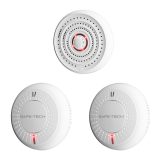
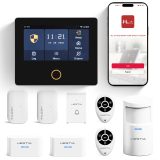
Interlinked Alarms: Interlinked alarms are Hardwired or Battery powered alarms connected to one another through cables or radio signals. When one alarm is triggered, all the alarms in the home will sound. Interlinked alarms are a good option for larger homes or homes with multiple levels, as they provide comprehensive coverage. They are also a good option for homeowners who want to ensure that everyone in the home is alerted in case of an emergency.
Standalone Alarms: Standalone alarms are similar to battery-powered alarms in that they do not require wiring, but they also have a built-in battery backup in case of power outages. They are a good option for homeowners who want a more reliable option than battery-powered alarms but do not want to deal with wiring. Standalone alarms are typically less expensive than Interlinked alarms.
Conclusion: In conclusion, your home’s best type of smoke and carbon monoxide alarm will depend on your specific needs and preferences. Battery-powered alarms are a good option for renters or homeowners who do not want to deal with wiring, while hardwired alarms are a good option for larger homes or homes with multiple levels. Standalone alarms are a good option for homeowners who want less expensive safety than Interlinked alarms and do not want to deal with wiring. In contrast, interlinked alarms are a good option for homeowners who want to ensure that everyone in the home is alerted in case of an emergency. Ultimately, the most important thing is to ensure you have working smoke and carbon monoxide alarms in your home to keep you and your family safe.