England Fire Alarm Regulations & Buying Guide 2026

Choosing the right fire alarm for a home, rental property or HMO in England can be confusing. The requirements depend on the type of property, whether it is owner-occupied or rented, whether it is a new build, and whether additional HMO or fire-risk requirements apply.
This England fire alarm buying guide explains the key fire alarm regulations and smoke alarm requirements in England, then compares standalone, battery-powered interlinked and mains-powered interlinked alarms to help you choose the right protection for your property.
| Quick answer: Existing owner-occupied homes in England do not have the same blanket legal requirement for interlinked alarms as Scotland. For rented properties, landlords have specific legal duties to provide smoke alarms and, where applicable, carbon monoxide alarms. New homes and HMOs can have additional requirements under Building Regulations, licensing conditions and fire risk assessments. |
This guide is designed to make buying easier. It gives a short explanation of the rules, then helps homeowners, landlords and installers choose a practical SAFE-TECH option. For full legal detail, always refer to current Government guidance and any local HMO requirements.
1. Fire Alarm Regulations and Smoke Alarm Requirements in England
England does not have the same blanket rule as Scotland for every existing owner-occupied home. The requirements depend on whether the property is owner-occupied, rented, newly built or an HMO.
- Owner-occupied existing homes: there is no general legal requirement under the Smoke and Carbon Monoxide Alarm Regulations to install interlinked alarms, but working smoke alarms are strongly recommended.
- Rented homes: landlords must provide at least one smoke alarm on each storey that contains living accommodation.
- Rented homes with a fixed combustion appliance: a carbon monoxide alarm is required in the room containing the appliance, excluding gas cookers.
- New dwellinghouses: Approved Document B recommends smoke alarms to at least Grade D2, Category LD3, designed and installed in accordance with BS 5839-6.
- HMOs: requirements can be higher and vary by property type and local authority. Many smaller HMOs are specified with mains-powered interlinked systems, while larger or higher-risk HMOs may require a Grade A system.
Buying tip by SAFE-TECH: For a normal owner-occupied home, think of the options as three protection levels: standalone for essential detection, battery interlinked for improved whole-home warning, and mains-powered interlinked for a premium long-term protection. Please note: many smart fire alarms do not support interlinking, DO NOT meet the interlinked requirement.

2. What Fire Alarm Do I Need for My Home in England?
There is no single kit that suits every English property. The best option depends on the property type, the level of protection wanted and whether the home is rented or subject to HMO requirements. The table below is a practical starting point. (Click to view product)
Important: HMO requirements vary. Do not select an HMO fire alarm system solely from this table. Confirm the required Grade, Category and installation specification for the individual property.
SAVE 10% To build your own bundle: Create My Own Battery Interlinked Bundle or Build your own Mains interlink Bundle


Important for HMOs: do not select an alarm system solely from a generic buying table. HMO requirements depend on the building, number of storeys, occupancy, local licensing conditions and fire risk assessment. Check with the local authority or competent fire-safety professional before specifying the system.
3. Landlords, BTL & HMO Properties
For landlords in England, the legal minimum is different from the rules for owner-occupied homes. The Smoke and Carbon Monoxide Alarm Regulations require relevant landlords to provide at least one smoke alarm on each storey containing living accommodation, plus a carbon monoxide alarm in rooms containing a fixed combustion appliance, excluding gas cookers. Landlords must also repair or replace prescribed alarms once informed and found to be faulty.
For BTL and standard rented homes: the regulations do not prescribe one specific power type. However, for landlords wanting a robust, low-maintenance professional installation, SAFE-TECH recommends considering the Grade D1 mains-powered interlinked range, subject to the property’s design and applicable requirements.
For HMOs: the fire alarm specification can be significantly more demanding. Local authorities may require Grade D1 LD2 or LD1 systems in some smaller HMOs, while larger or higher-risk buildings may require Grade A systems. Always check the HMO licence conditions, local authority guidance and fire risk assessment before purchasing.

| Installer note: A SAFE-TECH Grade D1 mains-powered interlinked system can be a strong option for many professional domestic installations, but it must not be presented as a universal HMO solution. The required grade and category must be confirmed for the individual property. |
Browse SAFE-TECH fire alarms kits and Learning hub.
4. Fire Alarms Explained: What Types of Fire Alarms Do You Need in England?
Standalone alarms: Basic protection
For homeowners looking for a simple, cost-effective starting point, standalone alarms are easy to understand and straightforward to fit in suitable domestic applications. SAFE-TECH offers both replaceable-battery and 10-year tamper-proof battery standalone smoke alarms.
Best for: small homes, straightforward replacements and customers who want essential detection without an interlinked system.
SAFE-TECH Standalone Smoke, Carbon Monoxide Alarms
Battery-powered interlinked alarms: One sound, all sound.
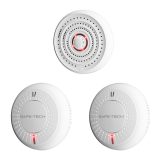
For stronger whole-home warning without running interlink cables, battery-powered interlinked alarms are an excellent upgrade. SAFE-TECH’s Grade F1 interlinked range uses radio mesh technology so compatible alarms can sound together when one is triggered.
Best for: existing homes, family houses, retrofit projects and customers who want interlinking without new mains wiring.
SAFE-TECH Battery Interlinked Fire Alarms
Build Your Own Interlinked Fire Alarms Bundle
Mains-powered alarms + built-in radio interlink: Premium protection
For renovations, extensions, professional installations, landlords and suitable HMO projects, SAFE-TECH’s Grade D1 230V mains-powered range provides fixed mains power, a 10-year tamper-proof backup battery and built-in mesh radio interlink. This combines the reliability of a fixed power supply with wireless interlinking between compatible alarms.
- 230V mains power with 10-year tamper-proof backup battery.
- Built-in RF / mesh radio interlink.
- Smoke, heat and multi-sensor options available.
- Suitable for professional installations where the selected system meets the property’s applicable requirements.
Important: 230V mains-powered alarms must be installed by a qualified electrician.
SAFE-TECH Mains Powered Interlinked Fire Alarms
Build Your Own Mains Interlink Fire Alarms Bundle
For deaf or hard of hearing occupants
Audible alarms alone may not provide sufficient warning for every occupant, particularly during sleep. Government landlord guidance specifically recognises that specialist alarms using vibration or flashing lights may be required for residents who are deaf or hard of hearing. SAFE-TECH can combine compatible fire alarms with visual and tactile alerting devices such as strobe lights and vibrating pillow pads.
Recommended approach: interlinked smoke and heat alarms with a strobe alert, with a vibrating pillow pad added where night-time tactile warning is needed.
Browse products:
- Interlinked Vibrating Pad
- Interlinked Plug In Strobe & Flash
- Smoke Heat Alarm & Plug-In Strobe Kit
- Pre-linked Smoke Heat Alarm, Vibration Pad & Plug-In Strobe Kit
Please note, it also radio compatible with both battery or mains-powered interlink range.

5. What to Check Before Buying a Fire Alarm in England
- Is the property owner-occupied, rented, newly built or an HMO?
- How many storeys contain living accommodation?
- How many bedrooms and sleeping areas need protection?
- Does the property contain a fixed combustion appliance requiring CO detection?
- Do you need standalone or interlinked smoke alarms?
- Would battery interlinked alarms avoid unnecessary rewiring?
- Would mains-powered alarms be more suitable for your installation?
- Is the property subject to Building Regulations or HMO licence conditions?
- Has a fire risk assessment been completed where appropriate?
- Does anyone in the property require visual or tactile warning?
- If choosing 230V mains-powered alarms, has installation by a qualified electrician been arranged?
6. Frequently Asked Questions About Fire Alarms in England
Do all homes in England legally need interlinked fire alarms?
No. Existing owner-occupied homes in England are not subject to the same blanket interlinking requirement as homes in Scotland. Interlinked alarms are nevertheless a strong choice for improved whole-home warning.
Can I use standalone smoke alarms in England?
Yes, standalone alarms can be suitable for many owner-occupied homes and for certain applications where they meet the relevant product and installation requirements. For rented properties, landlords must still meet the specific smoke and CO alarm duties that apply.
Are battery interlinked alarms a good option?
Yes. Battery interlinked alarms are a practical mid-range choice for existing homes because they can provide whole-home warning without running an interlink cable between alarms.
When should I choose mains-powered alarms?
Mains-powered alarms are an excellent premium choice for renovations, extensions, professional installations and many landlord applications. For new dwellinghouses and HMOs, always check the applicable building, licensing and fire-risk requirements.
What are the rules for landlords in England?
Relevant landlords must provide at least one smoke alarm on each storey containing living accommodation and a CO alarm in rooms containing a fixed combustion appliance, excluding gas cookers. They must also repair or replace prescribed alarms once informed and found to be faulty.
Do HMOs need mains-powered interlinked alarms?
Many HMOs are required by local authorities to have mains-powered interlinked detection, but the exact Grade and Category vary. Some larger or higher-risk HMOs may require a Grade A system. Always confirm the specification for the individual property.
What should I choose for a deaf or hard of hearing occupant?
Consider an alarm system that combines fire detection with visual and tactile warning, such as a strobe light and vibrating pillow pad, so the occupant is not relying on sound alone.
Can I install mains-powered alarms myself?
No. SAFE-TECH 230V mains-powered alarms must be installed by a qualified electrician.
How do I dispose of old smoke alarms?
Old smoke alarms should be disposed of responsibly, particularly where batteries or electronic components are involved. See our full disposal guide: How to Dispose of Old Smoke Alarms
Choose the Right Fire Alarm Protection for Your Property
For a typical owner-occupied home, the easiest buying decision is to choose your preferred protection level:
- Standalone for essential detection,
- Battery interlinked for improved whole-home warning,
- Mains-powered interlinked for a premium fixed installation.
- Landlords should select products that meet their statutory duties,
- HMO owners and installers should confirm the required alarm Grade and Category before ordering.
SHOP FIRE ALARMS & BUILD YOUR SYSTEM
https://www.safe-tech.co.uk/product-category/fire-alarms
Reference & Further Guidance
Government guidance checked for this 2026 buying guide: Smoke and Carbon Monoxide Alarm (Amendment) Regulations 2022 guidance for landlords and tenants; Approved Document B fire safety guidance; GOV.UK HMO licensing guidance.
GOV.UK landlord smoke and CO alarm guidance
Approved Document B fire safety FAQs
Regulations and guidance can change. Always check the latest official requirements before specifying a fire alarm system for a particular property.