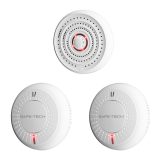
From Homes to High-Rises: A Look at the Alarms Every Building Needs

Fire alarms are an essential safety feature in any building. They alert occupants to the presence of a fire and give them time to evacuate before the situation becomes dangerous. But not all fire alarms are equal.
The type and number of fire alarms required for a building depend on its size, occupancy, and other factors.
In this blog post, we’ll look at what fire alarms you need in different types of buildings.
Fire Alarms For Homes
In a typical single-family home, the basic requirement is to have a smoke alarm on each level of the home, including the basement. For multi-story homes, it’s recommended to have a smoke alarm in every bedroom and the hallway outside of sleeping areas. Smoke alarms should appear on the ceiling or high up on a wall, away from windows and doors. As well as in locations where smoke is likely to travel, such as near kitchens and fireplaces. It’s also recommended to have a carbon monoxide alarm in each room with carbon fuel-burning appliances.
Fire Alarms For Schools
Schools are complex buildings with many different areas, so the fire alarm systems need a specific design. Typically, schools require a combination of manual pull stations, smoke detectors, and heat detectors. The alarms should interlink with each other so that when one’s triggered, they all sound. The system should allow for partial evacuation in a fire, such as evacuating only certain areas while keeping other areas secure. Schools should also have a communication system, such as an intercom, to make announcements and give instructions during emergencies.
Fire Alarms For Workplaces
The fire alarm system in a workplace will depend on the size and layout of the building. Workplaces generally require manual pull stations, smoke alarms, heat alarms, and sprinklers. The system should meet the needs of the occupants and the nature of the work taking place. For example, a laboratory may require a different system than an office building. These alarms should also interlink with each other so that when one triggers, they all sound. Workplaces should also have a clear evacuation plan and designated assembly areas.
Fire Alarms For Warehouses
Warehouses are typically large, open spaces with high ceilings and many combustible materials, so the fire alarm system needs a special design. The system should include manual pull stations, smoke alarms, heat alarms, and sprinklers. The alarms should Interlink, and the system should allow for partial evacuation if necessary. It’s also essential to have a communication system, such as a public address system, to make announcements and give instructions during an emergency.
Fire alarms are essential safety features in any building, but the required type and number of alarms will depend on size, occupancy, and other factors.
Homes generally need smoke alarms, heat alarms and carbon monoxide detectors. Schools need manual pull stations and interlinked alarms. Workplaces need a combination of alarms and sprinklers. Warehouses need a robust system that can handle the unique challenges of a large, open space. By installing the appropriate fire alarm system, you can help ensure the safety of occupants in the event of a fire.