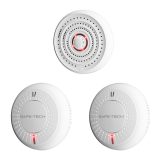
How does a carbon monoxide alarm work

Carbon monoxide alarms are the most effective way to detect carbon monoxide in the air and alert you to the presence of the dangerous gas.
Carbon monoxide consists of one part oxygen and one part carbon and is produced by partially burned carbon fuel sources like natural gas, coal, petrol, wood and propane. While harmless in an outdoor or well-ventilated area, carbon monoxide can be lethal in enclosed spaces. Very difficult to detect because of its lack of odour, excess carbon monoxide starves the body of oxygen by combining with haemoglobin in the lungs. This causes headaches, dizziness and nausea, before ultimately becoming fatal.
How does a carbon monoxide alarm work
Carbon monoxide alarms work like smoke or fire alarms, going off as soon as they detect surplus carbon monoxide in the air. There are three kinds of carbon monoxide detectors, all of which work slightly differently:
Biomimetic sensor
The alarm is set off by a colour-changing gel, which changes when it absorbs a certain level of carbon monoxide and triggers the warning.
Metal oxide semiconductor
Carbon monoxide reduces the electrical resistance in an electronic circuit, which trips the alarm and sets it off.
Electrochemical sensor
Changes in electrical currents, caused by the presence of carbon monoxide, in a chemical solution are detected by submerged electrodes. This then triggers the alarm.
Where to place a carbon monoxide detector
You should ideally have a carbon monoxide detector on each floor of your house and definitely in the same room as any potential source of the gas, such as a boiler, stove or oven. The detector should be placed around head height on a wall or shelf, although some are also built into ceiling-mounted multipurpose fire alarms. You should check your smoke detector to see whether it is already also fitted with a carbon monoxide detector.
Private landlords are bound by law to fit carbon monoxide alarms where necessary, and failure to do so can lead to a fine of up to £5,000. You can find out more about the government guidelines for landlords.
What to do if your carbon monoxide alarm goes off
The first thing to do if your carbon monoxide alarm goes off is to try to improve the ventilation to the room, by opening all windows and doors to try and rid your house of the gas. Carbon monoxide is most dangerous and concentrated in a sealed-off environment, so you need to ventilate your home to give the gas somewhere to escape to. Do not switch on lights or use matches or a lighter.
You should turn off any fuel-burning appliances like fires, boilers, cookers or ovens as quickly and safely as possible, and immediately exit the building. You should then remain outside, regardless of whether you are suffering from any of the aforementioned symptoms.
If you believe that it was one of your gas appliances that have caused the leak, ring the National Gas Emergency number on 0800 111 999*.