How to Change Smoke Alarm Battery

If your smoke alarm starts making a regular chirping or beeping sound, it may be time to replace the battery. Knowing how to change a smoke alarm battery is an important part of keeping your home protected and ensuring your alarm can warn you if a fire starts.
However, not every smoke alarm has a replaceable battery. Some models use removable batteries, while others contain a sealed long-life battery that cannot be changed separately. Mains-powered smoke alarms may also have a backup battery that needs attention.
In this guide, we explain how to change a smoke alarm battery safely, which battery to use, what to do if your smoke alarm keeps beeping after a battery change, and when you need to replace the entire alarm instead.
How to Change a Smoke Alarm Battery: Step-by-Step Guide
Before you start, check the manufacturer’s instructions for your particular smoke alarm. The battery type, opening mechanism and replacement procedure can vary between models.
Step 1: Identify Your Smoke Alarm Type
First, establish whether your smoke alarm has a replaceable battery.
Most domestic smoke alarms fall into three categories:
- Replaceable battery smoke alarms: These have a battery compartment that allows you to remove and replace the battery.
- Sealed battery smoke alarms: These contain a built-in battery designed to last for the intended service life of the alarm. The battery is not intended to be replaced separately.
- Mains-powered smoke alarms: These receive power from your home’s electrical supply and may have a backup battery or another standby power source.
Check the label, model number and user manual before removing anything. If your alarm has a sealed battery, do not attempt to open the casing or remove the battery. The correct solution may be to replace the complete alarm.
Step 2: Prepare the Correct Replacement Battery
Once you have confirmed that your smoke alarm has a replaceable battery, identify the exact battery type specified by the manufacturer.
Depending on the model, a smoke alarm battery may be a 9V battery, AA or AAA cells, or another specified type. Do not assume that every smoke alarm uses the same battery.
Before climbing a ladder, make sure you have the correct replacement battery available. Check its type, size and any relevant manufacturer requirements.
Using the wrong battery may prevent the alarm from operating correctly or cause the low-battery warning to continue.
Step 3: Remove the Smoke Alarm Cover
Some smoke alarms have a hinged or sliding battery compartment, while others need to be released from a mounting plate before the battery can be accessed.
Follow the manufacturer’s instructions to open the compartment or remove the alarm from its base.
If the alarm is ceiling-mounted, use a stable step ladder on a level surface. Ask another person to help if you cannot reach the alarm safely.
Never stand on a chair, stretch beyond your reach or force the alarm casing open with a screwdriver. If the cover will not open, check the instructions for a locking mechanism or contact the manufacturer.
Step 4: Remove the Old Battery
Once the battery compartment is accessible, carefully remove the old battery.
Take note of how the battery is positioned, including the positive (+) and negative (−) terminals. Some batteries connect using a clip, while others sit inside a compartment with spring contacts.
Do not pull forcefully on wires or connectors. If a battery appears stuck or the compartment is damaged, stop and consult the manufacturer’s guidance.
If you are replacing a battery in a mains-powered alarm, only carry out the battery replacement described in the user manual. Do not touch exposed electrical connections or alter the fixed wiring.
Step 5: Install the New Smoke Alarm Battery
Insert the new battery according to the polarity markings inside the compartment. Make sure the positive and negative terminals match the indicated positions.
If the battery uses a connector, attach it securely without forcing the connection. Close the compartment as instructed.
Do not mix old and new batteries, mix different battery types or use a rechargeable replacement unless the manufacturer specifically permits it.
Correct battery installation is essential. A battery that is inserted backwards, poorly connected or incompatible with the alarm may leave you without reliable fire detection.
Step 6: Refit and Test the Smoke Alarm
Close the battery compartment and refit the alarm securely to its mounting plate, following the manufacturer’s instructions.
Next, press and hold the test button until the expected alarm sound is heard. This helps check that the alarm’s power supply and alarm function are working.
If your smoke alarm is part of an interlinked system, follow the manufacturer’s procedure to check that the other compatible alarms respond as expected.
Do not assume that changing the battery means the alarm is working properly. If it does not sound during testing, continues to indicate a fault or cannot be refitted securely, investigate the problem promptly.
How Do You Know When a Smoke Alarm Battery Needs Changing?
A common sign of a low smoke alarm battery is an intermittent chirp or short beep at regular intervals. Some alarms also use indicator lights or other audible patterns to signal a low battery or fault.
The exact warning depends on the model, so check your alarm’s user manual rather than relying on the sound alone.
Common signs that your smoke alarm needs attention include:
- Regular chirping: The battery may be running low.
- A warning light: The alarm may be signalling low battery, a fault or another status.
- Failure during testing: The battery may be depleted, the alarm may be faulty, or the unit may have reached the end of its service life.
- Persistent warnings after a battery change: The battery may be incorrect, the alarm may need a model-specific reset, or the unit may need replacing.
Never ignore a warning from your smoke alarm. If it sounds continuously or gives a full fire alarm, treat it as a potential fire rather than assuming it is only a battery problem. Follow your household fire safety plan and investigate only when it is safe to do so.
What Type of Battery Does a Smoke Alarm Use?
The battery required depends on the make and model of your smoke alarm.
Some older or basic alarms use replaceable batteries, while other models use sealed long-life batteries. Mains-powered smoke alarms may use replaceable or sealed backup power arrangements.
Before buying a replacement, check the battery compartment, product label or instruction manual. Do not choose a battery based only on its physical size.
If you are considering a replacement smoke alarm, compare the maintenance requirements as well as the purchase price. A model with a user-replaceable battery may require regular battery purchases, while a sealed-battery model avoids routine battery changes but must be replaced as a complete unit when required.
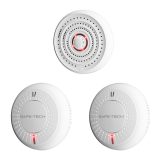
SAFE-TECH offers both standalone smoke alarms with replaceable batteries and smoke alarms with tamper-proof batteries. Check each product’s specifications and instructions before choosing the right option for your property.
Can You Change the Battery in a Sealed Smoke Alarm?
In most sealed-battery smoke alarms, the battery is not designed to be removed or replaced separately.
These alarms contain a built-in battery intended to power the device for its specified service life. When the alarm gives an end-of-life warning or reaches its replacement date, you generally need to replace the complete unit.
Do not try to prise open the casing, cut into the alarm or remove a sealed lithium battery. Doing so may damage the device and compromise its safety.
Check the manufacturer’s instructions and the date printed on the alarm. If the unit has reached the end of its service life, replace it with a suitable alarm and install and test it according to the instructions.
A sealed battery can reduce the need for routine battery changes, but it does not remove the need to test and maintain the alarm.
How to Change the Battery in a Mains-Powered Smoke Alarm
A mains-powered smoke alarm receives its main power from your home’s electrical supply. Some models also contain a backup battery to help keep the alarm operating during a power cut.
If your mains-powered smoke alarm starts chirping, the backup battery may need replacing. However, the sound could also indicate a fault or that the complete alarm has reached the end of its service life.
Check the user manual to confirm whether the backup battery is user-replaceable. If it is, follow the specified procedure and use the correct replacement battery.
Do not disconnect fixed wiring, remove electrical connectors or attempt to repair the mains supply yourself. If the alarm must be disconnected from its wiring, the mounting base is damaged, or you are unsure how to proceed, contact a qualified electrician or the alarm manufacturer.
After the battery has been replaced, refit the alarm and test it as instructed. If the warning continues, do not leave the alarm disconnected while waiting for a repair.
Why Does Your Smoke Alarm Keep Beeping After a Battery Change?
If your smoke alarm keeps beeping after you have fitted a new battery, there are several possible explanations.
1. The Battery Is Installed Incorrectly
Check that the positive and negative terminals match the markings in the battery compartment. Make sure the battery or connector is seated correctly.
2. You Have Used the Wrong Battery
A battery may physically fit but still be unsuitable for your particular alarm. Check the product instructions and replace it with the specified type if necessary.
3. The Alarm Needs a Reset
Some smoke alarms require a particular reset procedure after the battery has been changed. Follow the instructions for your exact model rather than using a reset method intended for another alarm.
4. Dust or Debris Is Affecting the Alarm
Dust and small insects can interfere with a smoke alarm’s operation and may contribute to false alarms or fault warnings.
Clean the unit only as directed by the manufacturer. A soft brush attachment on a vacuum cleaner may be suitable for some models, but do not spray cleaning products into the alarm or dismantle its sensing chamber.
5. The Alarm Has Reached the End of Its Service Life
A new battery will not solve every alarm problem. If the unit has reached its replacement date, has a persistent fault or continues to chirp despite following the correct procedure, you may need to replace the complete alarm.
If the warning continues, consult the manufacturer or a qualified professional. Keep the alarm operational while arranging the appropriate solution.
How Often Should You Change a Smoke Alarm Battery?
The replacement schedule depends on the type of alarm and the battery fitted.
For a smoke alarm with a replaceable battery, follow the manufacturer’s recommended replacement interval. Some traditional models require the battery to be changed annually, while others have different requirements.
For a sealed-battery smoke alarm, you do not normally change the battery separately. Instead, follow the product’s replacement date and instructions for the complete unit.
You should also test your smoke alarms regularly. The UK Government’s Fire Safety in the Home guidance recommends testing smoke alarms at least monthly. Some fire and rescue services recommend weekly testing, so follow the advice applicable to your home and the manufacturer’s instructions.
A simple maintenance routine can help:
- Regularly: Test every smoke alarm using its test button.
- When a low-battery warning appears: Replace the battery promptly if it is designed to be replaceable.
- During routine maintenance: Clean the alarm as directed by the manufacturer.
- At the end of the alarm’s service life: Replace the complete unit when required.
Never remove a smoke alarm battery simply to stop an unwanted warning. If cooking fumes cause a nuisance alarm, use the hush function only as directed and make sure the alarm returns to normal operation.
Frequently Asked Questions About Changing Smoke Alarm Batteries
Can I use any battery in my smoke alarm?
No. Use the exact battery type specified by the manufacturer. A battery that fits the compartment may not meet the alarm’s requirements.
How do I change a smoke detector battery without removing it from the ceiling?
Some smoke alarms have a battery compartment that can be opened while the unit remains attached to its mounting plate. Others must be released first. Check the user manual and never force the cover.
Do all smoke alarms have replaceable batteries?
No. Some alarms use replaceable batteries, while others have sealed batteries that cannot be changed separately. Mains-powered alarms may also have a backup battery.
Can I leave my smoke alarm without a battery?
No. Do not leave a battery-powered alarm without its required battery or disconnect an alarm to silence a warning. Restore protection promptly using the correct battery or replacement alarm.
What should I do if my smoke alarm still beeps after changing the battery?
Check the battery type and polarity, follow the model-specific reset instructions and look for an end-of-life or fault warning. If the alarm continues to beep, contact the manufacturer or replace the unit if required.
Should I replace the whole smoke alarm when changing the battery?
Not necessarily. If the alarm has a replaceable battery and remains within its service life, changing the battery may be sufficient. If it has a sealed battery, has reached its replacement date or has a persistent fault, the complete alarm may need replacing.
Final Thoughts: How to Change Smoke Alarm Battery Safely
Knowing how to change a smoke alarm battery helps you maintain an important part of your home’s fire protection. The process is usually straightforward when the alarm has a user-replaceable battery, but it is essential to identify the correct battery and follow the manufacturer’s instructions.
Remember that not every smoke alarm battery can be changed. Sealed-battery alarms generally need to be replaced as complete units at the appropriate time, while mains-powered alarms may have a separate backup battery.
After every battery replacement, refit the alarm securely and test it. If it continues to beep, displays a fault or fails its test, investigate the cause promptly rather than leaving it without power.
For homeowners looking for a replacement, explore the SAFE-TECH range of smoke alarms. Compare battery arrangements, product instructions and the requirements for your property before making a choice.
Regular testing, timely maintenance and the correct replacement procedure help ensure that your smoke alarms remain ready to provide an early warning if a fire occurs.