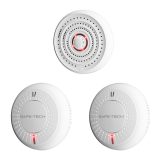
What Is an Interlinked Smoke Alarm and How Does It Work?

An interlinked smoke alarm system helps people hear a fire warning wherever they are in a property. Unlike a standalone smoke alarm, which sounds only when that individual unit detects smoke, an interlinked system allows connected alarms to sound together.
This can be particularly useful in larger homes, properties with multiple floors, and households where someone might not hear an alarm from another room.
But what is an interlinked smoke alarm, how does it work, and is a wireless system the same as a smart home alarm? In this guide, we explain the technology, the main types of interlinked alarms, their benefits and limitations, and what to consider when choosing a system for your home.
What Is an Interlinked Smoke Alarm?
An interlinked smoke alarm is a smoke detector connected to one or more compatible alarms so that they can communicate with each other.
When one alarm detects smoke and activates, it sends a signal to the other linked units. These alarms then sound as part of the same warning system.
For example, imagine a fire starts in a downstairs living room while someone is asleep in an upstairs bedroom. A standalone alarm in the living room might not be loud enough to wake them, particularly with bedroom doors closed. With a correctly installed and functioning interlinked system, the other connected alarms can also sound, helping alert people elsewhere in the property.
This is the main difference between an interlinked smoke alarm and a standalone smoke alarm: interlinking allows one alarm to trigger the others, rather than relying on people hearing a single alarm from a distance.
Interlinked alarms are sometimes called interconnected smoke alarms or linked smoke detectors. The terminology can vary, but the important point is whether the units communicate with one another and activate together.
How Do Interlinked Smoke Alarms Work?
Interlinked smoke alarms work by combining two functions: detecting a potential fire and communicating a warning to other connected units.
1. An alarm detects smoke
Each smoke alarm has a sensor designed to detect smoke particles. If smoke reaches the sensor at a sufficient level to trigger the alarm, the unit activates its audible warning.
A smoke alarm detects smoke; it does not identify the exact cause of a fire or guarantee that every fire will be detected immediately.
2. The alarm sends a signal
Once the detecting alarm activates, it communicates with the other units in the interlinked system. Depending on the design, this signal travels through electrical wiring or a wireless radio-frequency connection.
3. The other alarms sound
The compatible linked alarms receive the signal and activate their sounders. This means the warning can be heard in different parts of the property, even if the original alarm is some distance away.
The system does not need every alarm to detect smoke independently before it sounds. A signal from one alarm can activate the other linked units.
4. People receive a warning in more than one location
If the alarms have been positioned appropriately, a warning can be heard in bedrooms, hallways, landings and other covered areas. This can give occupants a better chance of recognising a fire and starting their escape.
However, interlinking does not guarantee that everyone will hear an alarm. Background noise, closed doors, hearing difficulties and the layout of the property can affect how well a warning is perceived.
What Are the Different Types of Interlinked Smoke Alarms?
There are two common ways to connect smoke alarms: wired interlinking and wireless radio-frequency interlinking.
Wired interlinked smoke alarms
Wired interlinked smoke alarms communicate through electrical connections between the units. They are often installed as part of a mains-powered fire alarm arrangement.
Potential advantages:
- A physical connection carries the interlink signal.
- They can be suitable for planned installations in new-build properties or during renovation work.
- They can form part of a wider domestic alarm arrangement.
Things to consider:
- Installation may involve additional wiring.
- Mains-powered alarms should be installed by a qualified electrician.
- The system may require more planning if you are adding alarms to an existing property.
The exact installation requirements depend on the system, the building and the applicable regulations.
Wireless interlinked smoke alarms
Wireless interlinked smoke alarms use radio-frequency (RF) communication to send signals between compatible units. This means the alarms can communicate without a dedicated interlink cable running between each detector.
Some wireless systems use battery-powered alarms, while others offer radio interlinking alongside a mains power supply. The power source and communication method are separate features, so it is important to check both when comparing products.
Potential advantages:
- They can be easier to add to an existing property where running interlink cables would be disruptive.
- They can reduce the need for interlink wiring between alarm locations.
- They may offer greater flexibility when planning alarm positions.
Things to consider:
- All units must be compatible with the same interlink system.
- Radio communication must work reliably across the property.
- Batteries, power supplies and the manufacturer’s maintenance requirements still need attention.
Wireless interlinking does not automatically mean an alarm is connected to the internet. In many systems, the alarms communicate directly with one another using radio signals.
Do Interlinked Smoke Alarms Need Wi-Fi?
No. Many wireless interlinked smoke alarms do not need Wi-Fi.
Wireless interlinking and Wi-Fi are different technologies used for different purposes.
A wireless interlinked smoke alarm typically uses radio-frequency communication to send an alarm signal to compatible units. This communication can work without an internet connection, a Wi-Fi router or a smartphone app.
A smart smoke alarm may offer additional features, such as app notifications or remote monitoring, but these depend on the product and its connectivity requirements.
Before choosing an alarm, consider what you actually need:
- Interlinking: Allows connected alarms to sound together.
- Wi-Fi or smart connectivity: May provide additional connected features, depending on the model.
- Battery or mains power: Determines how the alarm receives its operating power.
These features should not be confused. If your main aim is to hear a fire warning throughout your home, check that the alarms support the required interlinking function rather than assuming that Wi-Fi is necessary.
What Is the Difference Between an Interlinked and a Standalone Smoke Alarm?
The main difference is how the alarms respond when one unit detects smoke.
| Feature | Standalone smoke alarm | Interlinked smoke alarm |
|---|---|---|
| Detects smoke | Yes | Yes |
| Sounds when its own sensor triggers | Yes | Yes |
| Can trigger other compatible alarms | No, unless part of a separate compatible link system | Yes |
| Warning across multiple rooms | Depends on whether the individual alarm can be heard | Connected alarms can sound together |
| Suitable for multi-floor homes | May offer less coordinated warning | Can help provide a more coordinated warning |
| Communication method | None required between units | Wired or wireless, depending on the system |
A standalone smoke alarm can still provide an important early warning and is better than having no working alarm. Interlinking adds another layer of warning by allowing multiple units to sound together.
For a property with several floors or bedrooms separated from the main living areas, this coordinated warning can be especially valuable.
What Are the Benefits of Interlinked Smoke Alarms?
1. A warning throughout the property
When one alarm activates, the other connected alarms can sound as well. This can help people recognise a potential fire even when they are far from the original detector.
2. Useful for multi-storey homes
Sound from one floor may not carry clearly to another, particularly at night. Interlinked alarms help address this by spreading the audible warning across connected areas.
3. Greater awareness while sleeping
A fire can start when people are asleep or unaware of what is happening elsewhere in the house. An alarm sounding in more than one location may help occupants notice the warning sooner.
4. Flexible system options
Depending on the product range, a compatible system may include smoke alarms, heat alarms and other alarm types. This can help provide detection suited to different areas of a home.
Always check the manufacturer’s compatibility information. Alarms should not be assumed to interlink simply because they are made by the same manufacturer or look similar.
5. Options for people with hearing difficulties
Some alarm systems can work with compatible accessories such as flashing lights or vibrating pillow pads. These can provide alternative ways to receive a warning for people who may not hear a conventional sounder.
The accessory must be suitable for the alarm system, and the complete arrangement should be tested according to the manufacturer’s instructions.
Where Should Interlinked Smoke Alarms Be Installed?
Interlinking is only one part of a good fire detection arrangement. The alarms also need to be positioned appropriately.
For general domestic fire safety, UK government guidance recommends fitting at least one smoke alarm on every level of the home. Hallways and landings are common locations because they form part of the routes people use to move around the property.
Consider the following when planning alarm locations:
- Hallways and landings: These help provide warning along circulation routes and between floors.
- Living areas: A smoke alarm may be appropriate in the main living room or the room used most frequently, subject to local requirements.
- Bedrooms: Additional detection may be beneficial, particularly where people sleep with doors closed.
- Kitchens: A suitable heat alarm is often more appropriate than a smoke alarm in an area where cooking fumes can cause unwanted activations.
- Other areas: Bathrooms and locations affected by steam, dust or strong air currents may be unsuitable for certain smoke alarms.
Follow the alarm manufacturer’s installation instructions, including the required clearances from walls, lights, vents and other obstructions. The ideal arrangement depends on the property layout and the relevant fire safety guidance.
For more information, read the UK government’s guide to fire safety in the home.
Are Interlinked Smoke Alarms a Legal Requirement in the UK?
The answer depends on where you live, the type of property and the circumstances.
In Scotland, interlinked smoke and heat alarms form part of the required standard for homes introduced in February 2022. Scottish Fire and Rescue Service guidance explains the expected arrangement, including smoke alarms in the main living room and hallways or landings, together with a heat alarm in the kitchen.
In England, government guidance recommends at least one smoke alarm on every level of the home and explains the benefits of linked alarms. Specific legal duties can also apply to rented properties and other types of buildings.
Wales and Northern Ireland have their own rules and guidance, and additional requirements may apply to landlords, houses in multiple occupation (HMOs), new builds or major building work.
Do not assume that the same requirements apply to every UK property. If you are a landlord, tenant, homeowner or property professional, check the current rules for your nation and property type before selecting or installing a system.
You can consult Scottish Fire and Rescue Service guidance on smoke and heat alarms and the relevant local authority for further information.
How Do You Test Interlinked Smoke Alarms?
Regular testing is essential. An interlinked system should not be assumed to work simply because one alarm sounds.
Follow the manufacturer’s instructions, and use the test button on each alarm as directed. Where the system is designed to activate all linked units during a test, check that the other alarms respond as expected.
A sensible maintenance routine includes:
- Test the alarms at the interval recommended by the manufacturer and applicable guidance.
- Confirm that the linked alarms sound when the system is tested.
- Check for low-battery warnings, fault indicators or other alerts.
- Keep alarms clean and free from dust, paint and obstructions.
- Replace batteries or complete other maintenance as instructed.
- Replace alarms when they reach the end of their stated service life.
If one alarm fails to sound, the interlink function appears unreliable, or a fault indicator remains active, consult the manufacturer’s instructions and seek appropriate support. Do not leave a fire alarm system with a known fault unattended.
For more practical advice, see our guide to how to test a smoke alarm in the UK.
How Do You Choose an Interlinked Smoke Alarm System?
If you are considering interlinked smoke alarms, focus on the requirements of your property rather than choosing solely on price or appearance.
First, consider the layout. A larger or multi-storey home may need more than one alarm to provide suitable coverage.
Next, choose the appropriate power and connection method. Wired and wireless systems have different installation considerations. A battery-powered alarm can still be wirelessly interlinked if it is designed for that purpose.
Check compatibility carefully. Interlinked alarms generally need to belong to a compatible system. Do not mix different models or brands unless the manufacturers explicitly confirm that they can work together.
Consider the detection type. Smoke alarms, heat alarms and carbon monoxide alarms serve different purposes. A smoke alarm does not replace a carbon monoxide detector, and a heat alarm is not a substitute for smoke detection throughout the home.
Finally, check the product information and local requirements. Review the applicable standards, installation instructions, battery arrangements, service life and maintenance guidance for the specific model.
If you would like to understand the available options, SAFE-TECH provides a range of interlinked fire alarms and related systems. You can review the specifications to identify which products may suit your requirements.
Frequently Asked Questions
Do all interlinked smoke alarms sound at the same time?
In a correctly configured system, when one alarm detects smoke and triggers the interlink function, the compatible linked alarms are designed to sound together. The exact behaviour depends on the system, so check the manufacturer’s instructions and test the installation.
Can I connect different brands of interlinked smoke alarms?
Not necessarily. Different manufacturers may use different communication protocols, and products from the same manufacturer may also belong to separate systems. Only connect alarms where compatibility is explicitly confirmed.
Are wireless interlinked smoke alarms reliable?
A suitable wireless system can provide coordinated warning without dedicated interlink cables. Its performance depends on the equipment, correct installation, radio communication and ongoing maintenance. Follow the manufacturer’s instructions and test the complete system regularly.
Can I use interlinked heat alarms as well as smoke alarms?
Some compatible systems support both smoke alarms and heat alarms. A heat alarm can be suitable for a kitchen or another location where a smoke alarm may be prone to unwanted activation. Check the product specifications and local requirements to establish the correct combination.
Do interlinked smoke alarms still work if the internet goes down?
Many radio-interlinked systems communicate directly between the alarms and do not depend on an internet connection. However, smart features may have separate connectivity requirements. Check the details for your particular system.
Are interlinked smoke alarms better than standalone alarms?
Interlinked alarms can provide a more coordinated warning across a property because one triggered unit can activate the other connected alarms. A standalone alarm still provides valuable protection in the area where it is installed. The appropriate arrangement depends on the property, the applicable requirements and the occupants’ needs.
Final Thoughts
An interlinked smoke alarm system allows compatible alarms to communicate so that a fire warning can be heard in more than one part of a property. It can be particularly useful in larger or multi-storey homes, where a single alarm may not be heard clearly from every room.
Understanding the difference between wired and wireless interlinking, checking compatibility, choosing suitable alarm locations and testing the complete system regularly are all important steps.
The aim is not simply to install more alarms, but to make sure the property has an appropriate, functioning fire detection and warning arrangement. Always follow the manufacturer’s instructions and check the requirements that apply to your home.
For further information, explore SAFE-TECH’s interlinked fire alarm range or read the official fire safety guidance for your part of the UK.