Why Is My Fire Alarm Beeping or Flashing? Fire Alarms Troubleshooting Guide 2026

Two distinct sections: SAFE-TECH model-specific LED and sound codes, followed by general advice for FireAngel, Aico, Kidde and other alarms.
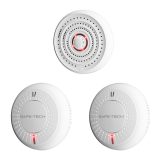
Figure 1. Fire alarm indicator lights and testing. Generic illustrative devices, not product-model photographs.
Quick answer: A short, intermittent chirp often means low battery, end of service life or a fault; an occasional LED flash can be completely normal. A loud repeating alarm is different: it may indicate smoke, heat or dangerous carbon monoxide (CO). There is no universal colour code across every alarm or manufacturer.
| SAFETY FIRST If a full smoke or heat alarm is sounding and you suspect fire, get out, stay out and call 999. If a CO alarm sounds, move into fresh air immediately, seek appropriate medical advice and do not re-enter until it is safe. Never silence an alarm solely because the colour or noise looks familiar. |
This FAQ covers search questions such as “why is my smoke alarm flashing red?”, “fire alarm beeping every minute”, “smoke alarm flashing green”, “interlinked fire alarms going off for no reason” and “carbon monoxide alarm beeping”. First identify the make and model printed on the alarm or its manual; then compare the LED colour, number of flashes, sound sequence and time interval.
Part 1 — SAFE-TECH fire alarm LED and sound troubleshooting
The following model-specific signals are transcribed from the SAFE-TECH LED comparison document supplied for this article. They apply only to the listed model families; the manufacturer’s current manual for the exact unit takes precedence. An LED colour used on one SAFE-TECH model must not automatically be applied to another.
How do I find the model number on a SAFE-TECH alarm?
Check the product label, packaging, user manual or order details for the model or SKU. For example, AJ-763i is a battery radio-interlinked smoke alarm, AJ-718i is a radio-interlinked heat alarm, and ST-110-XMI is a mains-powered smoke, heat and CO combination alarm. The uploaded comparison also lists factory identifiers such as AJ-963SCTA4 alongside SAFE-TECH SKUs. Record the SKU and whether your unit is battery- or mains-powered before interpreting an indicator.

Figure 2. SAFE-TECH alarm-family signals reproduced from the supplied model comparison (excluding the separate vape-detector entries).
SAFE-TECH quick-reference: green, red and yellow lights
| SAFE-TECH / original model | Normal operation | Low battery | Fault |
|---|---|---|---|
| AJ-763i (AJ-763SI4) AJ-718i (AJ-718) | 1 green flash every 60 seconds | 1 red flash + 1 beep every 60 seconds | 2 red flashes + 2 beeps every 60 seconds |
| ST-110-SMI (AJ-963SA4) ST-110-HMI (AJ-963TA4) ST-110-XMI (AJ-963SCTA4) ST-110-XMH (AJ-963CTA4) ST-110-XIH (AJ-963CTU4) ST-110-XIT (AJ-963SCTU4) ST-210-HIT (AJ-963TU4) | 1 green flash every 60 seconds | 1 red flash + 1 beep every 60 seconds | 2 yellow flashes + 2 beeps every 60 seconds |
| AJ-833si (AJ-833SI4Y) ST-110-CSA (AJ-830) | 1 green flash every 60 seconds | 1 yellow flash + 1 beep every 60 seconds | 2 yellow flashes + 2 beeps every 60 seconds |
The pattern is defined by both the flash colour and the beep count. For example, two red flashes with two beeps is a fault signal for the AJ-763i/AJ-718i family; the corresponding fault signal on the ST-110-SMI family uses yellow instead. A green flash once per minute is documented as normal for the three fire-alarm groups in the table.
What if my SAFE-TECH alarm flashes once and chirps every 60 seconds?
For AJ-763i, AJ-718i and the ST-110-SMI/HMI/XMI/XMH/XIH/XIT and ST-210-HIT family, one red flash and one beep per minute is documented as a low-battery warning. For AJ-833si and ST-110-CSA, the supplied chart instead shows one yellow flash and one beep per minute. Act promptly: follow the exact unit’s manual, and replace a sealed-battery alarm when the battery is not user-replaceable.
What does two flashes and two beeps mean on SAFE-TECH?
The uploaded chart identifies this as a fault condition. AJ-763i and AJ-718i use two red flashes with two beeps per minute; the ST-110 series and AJ-833si/ST-110-CSA groups use two yellow flashes with two beeps per minute. Check for the exact model’s troubleshooting or replacement instructions. Do not treat a persistent fault as a harmless low-battery reminder or assume the alarm remains able to detect danger.
Do different SAFE-TECH alarms use different sounds for smoke, heat and CO?
Yes. The supplementary diagram at the bottom of the supplied comparison describes distinct signals for combined smoke/heat/CO alarms. Its smoke, CO, heat, hush and interlinked signal examples are useful for understanding the difference between a real alarm and a maintenance chirp, but the extract does not unambiguously map every one of those signals to every SKU in the table. Therefore the exact product instructions should be checked before relying on the sequences below.

Figure 3. Hazard alarm examples from the supplied combination-alarm reference. Do not apply these timings to unrelated models.
The supplied combination-alarm inset describes three rapid red flashes and three long beeps in a smoke-alarm cycle of approximately 1.5 seconds; four rapid red flashes and four long beeps in a CO cycle of approximately five seconds; and rapid red flashes with a beep approximately every 0.3 seconds for heat detection. It also depicts a rapidly flashing interlinked alarm with two rapid beeps. These are alarm conditions, not routine maintenance chirps.
The inset describes a hush period of around nine minutes, during which the indicator continues flashing. Hush is temporary and must not be used to dismiss unexplained smoke, heat or CO warnings. Importantly, the inset and the main comparison chart do not use identical colour descriptions for every low-battery condition; the model-group table above is the more specific reference for the listed SKUs.
Why is only one interlinked SAFE-TECH alarm flashing?
The originating device may show a different indicator pattern from alarms that have received an interlinked signal. First rule out a genuine hazard. Once safe, consult the manual to identify the triggering device and check that all alarms are activated, compatible and correctly paired. Radio-interlinked devices must be compatible: do not assume that alarms from different brands will connect.
SAFE-TECH advises checking the linking procedure, power supply and obstacles between units. If a recently added alarm will not join the network, follow the documented pairing and reset sequence and retest each compatible alarm; seek technical support if the issue remains.
What about Vaper detector ST-1.3-VMI and ST-1.3-VXI in the source table?
These are listed in the supplied comparison because it covers additional detector products, but the supplied SAFE-TECH product list identifies ST-1.3-VMI and ST-1.3-VXI as smart vape-detector products rather than domestic smoke/heat/CO fire alarms. Their green flashes differ according to external power (every 90 seconds) or backup-battery operation (every 60 seconds), and their low-battery/fault indications are yellow. They should not be used as the reference pattern for a domestic fire alarm; consult their separate user instructions.
Where can I find a compatible SAFE-TECH replacement or manual?
For the models identified above, use the product descriptions or support pages rather than buying a visually similar unit: AJ-763i smoke alarm • AJ-718i heat alarm • ST-110-XMI mains-powered multi-sensor • ST-110-XIT battery multi-sensor • AJ-833si interlinked CO alarm • ST-110-CSA standalone CO alarm
For additional advice, read the SAFE-TECH fire alarm support FAQs or follow the exact user manual. If your alarm is sealed, do not cut open the unit or attempt to change its integral battery.
Part 2 — General fire alarm troubleshooting for other brands
This section is for owners of FireAngel, Aico, Kidde, Cavius and other domestic alarms. The principles are widely useful, but LED colours, intervals, reset functions and replacement instructions are not universal. Always establish the brand and exact model before following a specific pattern.

Figure 4. A brand-neutral first check: distinguish a full emergency alarm, an intermittent chirp and an LED flash without sound.
Why is my smoke alarm flashing red but not beeping?
A periodic red flash can be normal. For example, FireAngel states that its FA6620-R and FA6615-R smoke alarms normally flash red around every 40 seconds when active. On some other models, a red LED can be part of a low-battery, alarm-memory or fault signal. Without the model and timing, it is not possible to diagnose the alarm from the colour alone.
Why is my fire alarm beeping every 30, 40 or 60 seconds?
Intermittent chirping commonly points to low battery, end of service life, contamination or an electrical fault. Aico explains that a single beep approximately every 30 seconds to one minute may mean a low battery on certain models. FireAngel and Kidde give other model-specific intervals, demonstrating why counting the seconds and checking the model label are important.
Start by confirming which device is making the noise. A hidden CO alarm, another smoke detector or an unrelated electronic device may be responsible. If your alarm allows user battery replacement, fit only the specified battery. If it uses a sealed long-life battery, it may require replacing as a complete unit. Never remove a battery merely to stop the noise and leave the home unprotected.
FireAngel smoke alarm beeping or flashing: what should I check?
FireAngel reports that a regular red flash around 40 seconds can show normal operation on the FA6620-R and FA6615-R. For specified mains-powered models, FireAngel also recommends checking that the alarm is correctly attached to its baseplate and investigating flashing amber indicators or unsuccessful wireless pairing. These procedures are model-specific; confirm your product before removing a unit from its base.
If the alarm is sounding repeatedly without an obvious fire, consider steam, cooking fumes, insects and dust. Use the manufacturer-approved hush function only after confirming that there is no danger. If repeated warnings continue, seek assistance or replace the unit as directed.
Aico smoke alarm flashing red or chirping: is it faulty?
Aico advises finding the alarm with a rapidly flashing red light when a linked system is sounding and first determining whether a genuine fire is present. For unwanted activations, its fault-finding guidance discusses cleaning, checking for cooking fumes and reviewing installation location. An occasional chirp may indicate low battery on certain older models or a possible fault. Green mains-power lights and wiring should be checked by a competent installer if there is a power problem.
Kidde or Cavius alarm chirping: low battery or dust?
Kidde UK notes that chirping may result from a loose or incorrectly fitted battery, a low battery, dust and insects in the sensing chamber, or end of life. Its Cavius support also describes a short beep approximately every 48 seconds as a possible low-battery or end-of-life indication on certain models. The specific timing is not a cross-brand standard: check the actual manual.
How do I stop a smoke alarm beeping when there is no fire?
- Check the room for smoke, heat or signs of carbon monoxide danger before attempting any reset or hush action.
- Identify the exact device and make/model. Count the flashes, beeps and approximate interval.
- Look at the alarm’s replacement date and any fault or end-of-life indicator.
- Replace only an approved, user-replaceable battery; sealed alarms generally need whole-unit replacement when exhausted.
- Clean exterior vents using the approved method. Avoid sprays, painting, dismantling or unapproved smoke testing.
- Use the model-specific Test/Hush or reset instructions. Test the alarm and any interlink after the issue is resolved.
- If a fault persists or a mains electrical issue is suspected, contact the manufacturer, landlord or a suitably qualified electrician.
What if all my interlinked alarms are sounding but there is no smoke?
Treat the warning as real until you have checked for danger. Smoke can move through a building, and CO has no smell. Once safe, determine which unit originated the alarm using the system’s own indicators or event memory, then consult the linked-alarm instructions. Radio communication faults, poor siting or contamination can cause problems, but do not randomly unpair every device or disconnect wiring while occupants rely on the system.
Why does my alarm chirp at night?
Low-battery warnings or temperature-related issues may become more noticeable at night, but the time of day does not prove the cause. Identify the unit, check the pattern against the manual and act on low-battery or fault signals. A temporary silence setting, where supported, does not replace the required repair or replacement.
Can a carbon monoxide alarm beep because the battery is low?
Yes, some CO alarms use short intermittent chirps for low battery or end of service life. However, a sustained or repeating CO alarm pattern is an emergency warning. If a CO alarm activates, go into fresh air, avoid re-entering the property until it is safe, seek medical advice if exposure is possible and contact emergency services where appropriate. For suspected gas-related CO, the National Gas Emergency Service is 0800 111 999.
How often should smoke and heat alarms be tested?
The UK Government’s Fire Kills campaign advises testing smoke alarms at least monthly, using the Test button. Some fire and rescue services recommend weekly checks. Follow the alarm manufacturer’s instructions for testing, cleaning and replacement. Test linked systems in the specified way to check that compatible alarms respond.
Frequently asked fire alarm FAQs
Is a smoke alarm flashing green every minute normal?
It is documented as normal for the SAFE-TECH fire-alarm groups shown in the comparison chart. Other brands can use different colours or intervals, so check the model before interpreting it.
What does one red flash and one beep every minute mean?
On SAFE-TECH AJ-763i/AJ-718i and the listed ST-110 interlinked fire-alarm family, the supplied chart identifies this as low battery. Do not use this diagnosis for unrelated brands.
What does two yellow flashes and two beeps mean?
The supplied SAFE-TECH chart identifies a fault condition for its ST-110 group and AJ-833si/ST-110-CSA group. On other manufacturers’ products, check the specific manual.
Why is my smoke alarm beeping after a battery change?
The battery may be incompatible or incorrectly fitted, the unit may need its approved reset procedure, or it may have reached end of service life. A persistent warning needs investigation.
What does a rapidly flashing red light mean?
On some models it can accompany a genuine alarm or identify the triggering unit within a linked system. Treat a loud warning seriously and refer to the exact manufacturer instructions.
Can I silence a fire alarm for nine minutes?
The supplied combination-alarm reference describes a hush period of around nine minutes, but the actual duration and availability vary by model. Only use a silence feature after ruling out danger.
Why does my heat alarm go off without smoke?
A heat alarm responds to temperature, not smoke. Cooking or environmental heat may trigger it; check for fire before considering the alarm’s position or a possible defect.
When should a smoke alarm be replaced?
Replace it by the manufacturer’s stated service-life date or sooner if a fault persists or the alarm fails its approved test. A new battery cannot repair an expired sensor or faulty electronics.
A practical conclusion: the model number matters more than the LED colour
For SAFE-TECH devices, the supplied comparison gives a useful starting point: the main fire-alarm groups show a green flash every minute in normal operation, but red or yellow low-battery and fault indications vary by model. For FireAngel, Aico, Kidde and other brands, an occasional red flash may be normal, and a chirp does not always mean the same thing. Use the exact model manual, act on warnings promptly and never confuse a full hazard alarm with a maintenance reminder.
To explore compatible SAFE-TECH replacements, browse SAFE-TECH fire alarms. For related help, read How to Change Smoke Alarm Battery.