Wireless vs Wired Interlinked Smoke Alarms: What’s the Difference?

When choosing a fire alarm system for your home, you may come across two common options: wireless interlinked smoke alarms and wired interlinked smoke alarms. Both are designed to provide a warning across multiple areas of a property, but they use different methods to communicate.
So, which is better? Are wireless alarms as reliable as wired systems? Do wireless interlinked smoke alarms need Wi-Fi? And does choosing a mains-powered alarm automatically mean it is wired to the other detectors?
Understanding these differences can help you choose a suitable fire alarm arrangement for your property. In this guide, we compare wireless and wired interlinked smoke alarms, explain their advantages and limitations, and look at the factors worth considering before installation.
What Is the Difference Between Wired and Wireless Interlinked Smoke Alarms?
The main difference is how the alarms communicate with one another.
A wired interlinked smoke alarm system uses physical electrical connections to carry the signal between compatible alarms. A wireless interlinked smoke alarm system uses radio-frequency (RF) signals instead.
In both cases, the purpose is the same: when one alarm detects smoke and activates, the other connected alarms can also sound.
However, there is an important detail that often causes confusion. The way an alarm receives power and the way it communicates with other alarms are two separate things.
An alarm can receive power from the mains but use wireless radio signals to communicate with other units. Similarly, a battery-powered alarm can be part of a wireless interlinked system.
This means that the terms mains-powered, battery-powered, wired interlink and wireless interlink should not be treated as interchangeable.
What Are Wired Interlinked Smoke Alarms?
Wired interlinked smoke alarms communicate through electrical cables connecting compatible units. When one detector activates, the signal travels through the interlink wiring and triggers the other alarms in the system.
In many domestic installations, wired interlinked alarms are part of a mains-powered fire alarm arrangement. They may also have a backup power source, depending on the model and system design.
Advantages of wired interlinked smoke alarms
1. A physical communication connection
The interlink signal travels through cables rather than relying on radio communication between the alarms. This avoids the need to establish a wireless connection between units.
2. Suitable for planned installations
A wired system can be a practical option during new-build projects, major renovations or when an existing wired alarm system is being replaced.
3. No radio pairing between wired units
Where the system uses a dedicated wired interlink, the alarms communicate through their physical connections. This can simplify some aspects of system configuration.
Things to consider
Wired interlinked smoke alarms require suitable cabling between the alarm locations. If a property does not already have the necessary wiring, installation can involve additional work.
Running cables through finished ceilings, walls or floors may cause disruption. The final cost also depends on the number of alarms, the layout of the building and the work required.
Where installation involves the fixed electrical supply or electrical wiring, it should be carried out by a qualified electrician. Always follow the alarm manufacturer’s installation instructions and the requirements that apply to the property.
What Are Wireless Interlinked Smoke Alarms?
Wireless interlinked smoke alarms communicate using radio-frequency signals rather than a dedicated cable between each alarm.
When one unit detects smoke, it sends a radio signal to the other compatible alarms. They then activate to provide a coordinated warning throughout the property.
The alarms may use a particular radio protocol or a manufacturer’s own communication system. Some products use mesh radio technology, but the exact method depends on the model.
Advantages of wireless interlinked smoke alarms
1. Less interlink wiring
Wireless systems do not need a dedicated interlink cable running between every alarm. This can make them easier to install in existing homes where adding cables would be disruptive.
2. More flexibility when adding alarms
A compatible wireless system can make it easier to add further alarms in suitable locations, provided the system supports the additional units and the radio signal reaches them reliably.
3. Suitable for many existing properties
Wireless interlinking can be useful when upgrading an older property or replacing standalone alarms without carrying out extensive rewiring.
4. Battery and mains-powered options
Wireless interlinking is not limited to battery-powered alarms. Some systems use battery-powered units, while others use mains-powered alarms that communicate with each other by radio.
Things to consider
Wireless alarms depend on successful radio communication between compatible units. The building layout, distance between alarms and construction materials may affect signal performance.
You should follow the manufacturer’s guidance on positioning, pairing and testing. Do not assume that two wireless alarms will communicate simply because they operate on a similar frequency or are made by the same manufacturer.
Compatibility is particularly important when adding alarms to an existing system.
Wireless vs Wired Interlinked Smoke Alarms: Key Differences
The following table summarises the main differences.
| Feature | Wired interlinked alarms | Wireless interlinked alarms |
|---|---|---|
| Communication | Electrical interlink cables | Radio-frequency signals |
| Interlink wiring | Required | Not required |
| Installation | May involve more wiring work | Often less disruptive |
| Existing properties | Can be more complex to retrofit | Can be practical for upgrades |
| New-build projects | Can be planned into the installation | Can also be suitable where permitted |
| Radio communication | Not needed for the wired link | Required between linked units |
| Compatibility | Must match the wired system | Must support the same wireless system |
| Power supply | Often mains-powered, with backup depending on model | Battery-powered or mains-powered |
| Wi-Fi | Not normally required | Not normally required |
Neither system is automatically better in every situation. The right choice depends on the building, existing wiring, applicable requirements and the specific alarm products being used.
Is a Wireless Smoke Alarm the Same as a Battery-Powered Smoke Alarm?
No. This is one of the most important points to understand when comparing wireless and wired interlinked smoke alarms.
The word wireless usually describes how the alarms communicate, not how they receive power.
There are three common arrangements:
1. Battery-powered wireless interlinked alarms
These alarms use batteries for their operating power and radio signals to communicate with compatible units. They can be useful where installing new mains wiring is unnecessary or impractical, provided the selected system meets the property’s requirements.
2. Mains-powered wireless interlinked alarms
These alarms receive their main power from the property’s electrical supply but use radio signals to communicate with other compatible alarms.
Depending on the model, they may also have a backup battery or another standby power source. This arrangement combines mains power with wireless interlinking.
3. Mains-powered wired interlinked alarms
These alarms receive power from the electrical supply and use physical wiring to communicate with other compatible units.
This is a traditional arrangement for certain fixed fire alarm installations.
The key lesson is simple: a mains-powered smoke alarm can still be wireless when it comes to interlinking.
Do Wireless Interlinked Smoke Alarms Need Wi-Fi?
No. Most domestic radio-interlinked smoke alarm systems do not need a Wi-Fi connection or an internet router to communicate.
Wireless interlinked alarms generally use radio-frequency signals to send activation messages directly between compatible units. This is different from Wi-Fi, which is commonly used to connect devices to a home network or the internet.
Some smart smoke alarms offer additional features, such as smartphone notifications or remote monitoring. These functions may require Wi-Fi or another internet connection, depending on the product.
If your priority is simply to have several alarms sound together, check the product specifications for radio interlinking. Do not assume that a Wi-Fi-enabled alarm is necessary.
Which Is Better for Your Home: Wired or Wireless Interlinked Smoke Alarms?
There is no single answer for every property. Consider the following situations.
Existing homes with no interlink wiring
A wireless interlinked smoke alarm system may be a convenient option where you want connected alarms but do not want to run new cables through finished walls and ceilings.
A suitable battery-powered system may also avoid the need to connect each alarm to the fixed electrical supply. However, check the property’s requirements before making a decision.
New-build homes and major renovations
A wired system may be worth considering when the electrical installation is already being planned or upgraded. This can allow the installer to account for cable routes and alarm positions during the building work.
Wireless interlinking may also be suitable in some projects. The correct specification depends on the design, building regulations and applicable fire safety requirements.
Homes with an existing mains-powered alarm system
If your property already has mains-powered alarms, do not assume you can replace them with battery-powered wireless units without checking first.
The existing system may have been installed to meet building regulations, tenancy requirements or other property-specific obligations. Before changing it, identify how the original system is powered and interconnected.
If you are unsure, ask a qualified electrician or fire safety professional to assess the installation.
Can You Mix Wired and Wireless Interlinked Smoke Alarms?
Sometimes, but only when the manufacturer confirms that the particular models are compatible.
Some alarm systems allow mains-powered and battery-powered units to communicate through the same radio interlink network. Other systems only work with specific models or product ranges.
It is important not to assume that alarms can be mixed because they:
- Have the same brand name.
- Look similar.
- Use batteries of the same type.
- Are both described as wireless.
- Operate on a similar radio frequency.
Always check the compatibility information in the product documentation before adding or replacing an alarm.
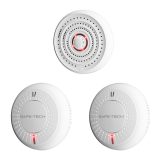
For example, SAFE-TECH’s fire alarm range includes both battery interlinked and mains-powered alarm categories. Some mains-powered models use radio interlinking rather than a dedicated interlink cable. You can review the individual product details in the battery interlinked fire alarm range and mains-powered fire alarm range.
Installation and Maintenance: What Should You Consider?
Regardless of whether you choose wireless or wired interlinked smoke alarms, correct installation and regular testing are essential.
Before installation, consider the following:
Check the number and position of alarms. The system should provide appropriate coverage for the property. Follow the manufacturer’s instructions and relevant fire safety guidance when deciding where alarms should be fitted.
Check compatibility. Every alarm in the interlinked system must be suitable for use with the others. Follow the specified pairing or wiring procedure.
Check the power supply. For battery-powered alarms, understand the battery type and replacement requirements. For mains-powered alarms, check the backup power arrangements and installation requirements.
Test the complete system. Do not only check whether one alarm sounds. Follow the manufacturer’s test procedure to confirm that the other linked alarms respond as expected.
Maintain every unit. Keep alarms clean, check for fault warnings and replace units when they reach the end of their stated service life.
For a practical explanation of testing, read our guide to how to test a smoke alarm in the UK.
Are Wireless or Wired Interlinked Smoke Alarms Required by UK Law?
The requirements depend on where the property is located, its use and the circumstances of the installation.
In Scotland, all homes must have the required interlinked smoke and heat alarms. Scottish guidance allows sealed long-life battery alarms or mains-wired alarms. Importantly, the Scottish Government explains that both types can be interlinked by radio frequency and do not need Wi-Fi.
In England, the smoke and carbon monoxide alarm regulations for relevant private and social rented properties require at least one smoke alarm on every storey used as living accommodation. The government guidance does not prescribe whether the smoke alarm must be mains-powered or battery-powered. Other requirements may apply under building regulations or to particular property types.
Wales and Northern Ireland have their own rules and requirements. Landlords, homeowners, installers and property managers should check the current guidance for their location and the type of property involved.
For further information, consult the Scottish Government’s fire and smoke alarm guidance and the GOV.UK guidance for landlords and tenants in England.
Frequently Asked Questions
Are wireless interlinked smoke alarms reliable?
A correctly selected, installed and maintained wireless system can provide coordinated warning across a property. Its performance depends on radio communication, compatible equipment and correct installation. Always follow the manufacturer’s instructions and test the complete system.
Are wired interlinked smoke alarms more reliable than wireless ones?
Not automatically. Wired systems use physical connections, while wireless systems use radio signals. Both can provide effective interlinking when properly specified, installed and maintained. The suitability of each system depends on the building and the equipment.
Can wireless interlinked smoke alarms work during a power cut?
It depends on their power supply. Battery-powered alarms can continue operating while their batteries have sufficient power. Mains-powered models depend on their backup power arrangements during an interruption to the electrical supply. Check the manufacturer’s specifications for the particular model.
Can I install wireless interlinked smoke alarms myself?
Some battery-powered wireless alarms are designed for straightforward installation, but you must follow the manufacturer’s instructions and check the requirements for your property. Mains-powered alarms involving fixed electrical wiring should be installed by a qualified electrician.
Do wireless interlinked alarms need to be connected to a router?
No, not for ordinary radio interlinking. Compatible alarms can communicate directly with each other without a Wi-Fi router or internet connection. Smart features may have separate connectivity requirements.
Can I replace a wired interlinked alarm with a wireless one?
Not without checking the existing system and the requirements that apply to the property. The original installation may need to remain mains-powered or meet specific building or tenancy requirements. Seek professional advice if you are unsure.
Final Thoughts
When comparing wireless vs wired interlinked smoke alarms, the most important difference is how the alarms communicate. Wired systems use physical interlink cables, while wireless systems use radio signals to connect compatible units.
Wireless systems can be less disruptive to install in existing homes, while wired interlinking may suit installations where cabling is already planned or available. However, power supply and interlinking are separate considerations: a mains-powered smoke alarm can still use wireless communication.
Rather than choosing one type simply because it sounds more advanced, consider your property’s layout, existing electrical installation, local requirements and the manufacturer’s compatibility guidance.
A suitable, correctly installed and regularly tested interlinked alarm system can help provide a coordinated fire warning throughout your home.